
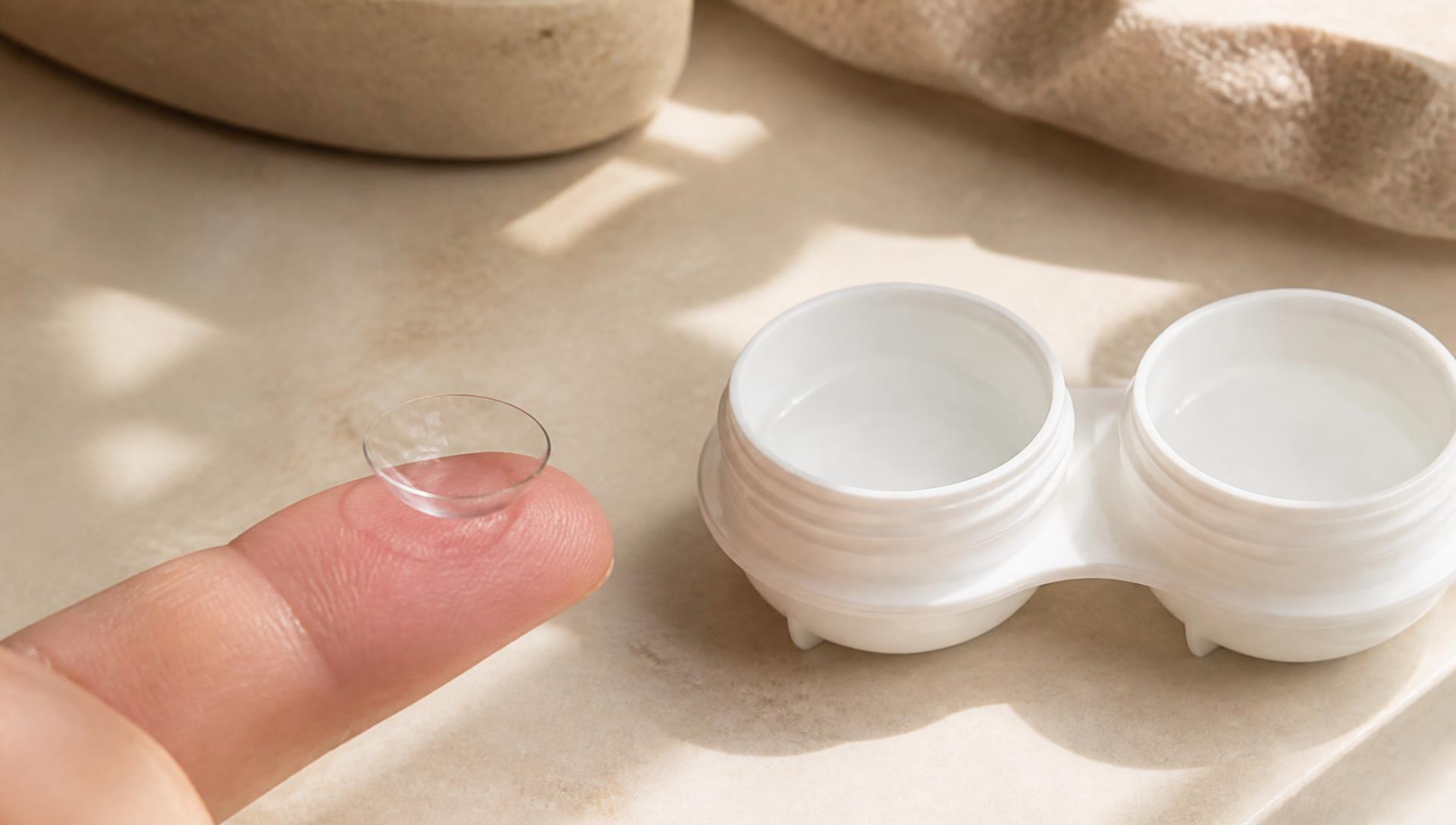
Contact Lens Care Guide
Simple steps to protect your eyes and keep your lenses comfortable
Here is a complete guide to help you maintain healthy eyes. Follow each step carefully for the best comfort and safety while wearing contact lenses.
Before You Start: Personal Hygiene
Wash Your Hands
- Wash your hands with soap and water for at least 20–30 seconds.
- Use fragrance-free and oil-free soap so no residue sticks to the lens.
Dry Properly
- Dry your hands with a clean, lint-free towel.
- Avoid tissues or fabrics that leave small fibers that could stick to the lens.
Avoid Barrier Products
- Do not handle lenses after applying creams or makeup.
- Keep fingernails clean and short to avoid scratching the eye or lens.
Make sure your hands are completely dry before touching lenses. Moisture affects lens positioning and eye comfort.
How to Insert a Lens — Part 1
Wash Hands
- Wash your hands with soap and water.
Inspect the Lens
- Inspect the lens to make sure it is clean and intact.
Rinse
- Rinse the lens well with fresh solution before inserting it.
Check Lens Shape
- Place the lens on your fingertip and check that the edges point upward like a U.
- If the edges flare outward, the lens is inside out.
How to Insert a Lens — Part 2
Lift the Upper Eyelid
- Use your fingers to gently lift your upper eyelid.
Place the Lens
- Gently place the lens on the white part of your eye.
Blink to Settle
- Slowly blink a few times so the lens settles into place comfortably.
How to Remove a Lens
Wash Hands
- Wash your hands thoroughly with soap and water, then dry them completely before continuing.
Position Your Eyelids
- Use your index finger to lift the upper eyelid and your middle finger to pull the lower eyelid down.
Gentle Pinch
- Place the tips of your index and thumb on the lens edges and pinch gently.
Remove and Store
- Lift the lens gently from your eye, check that it is clean, then place it in fresh solution.
Critical Warnings
Never Sleep in Lenses
- Sleeping in lenses restricts oxygen to the eye and may cause serious infections, unless they are specifically approved for overnight wear.
Avoid Tap Water
- Tap water can contain bacteria that cause eye infections. Only use approved lens solution.
Use Lens-Safe Drops
- Use rewetting drops designed for contact lenses when dry. Do not use regular eye drops while wearing lenses.
If you feel pain, redness, or vision changes, remove the lens immediately and consult an eye doctor. Never ignore abnormal symptoms.
Lens Care Tips
Proper Storage
- Use a clean lens case.
- Change the solution every day.
- Clean the case weekly.
- Replace the case every 3 months.
Replace Lenses on Time
- Follow the replacement schedule (expiration date).
- Do not wear lenses past their expiration.
- Keep a replacement schedule.
- Buy lenses only from trusted sources.
Replacement periods depend on lens type: daily, monthly, or yearly.
Daily Lens Care Routine
Every Morning
- Rinse the lens with solution before inserting it. Make sure your hands are clean and the lens is intact.
Every Evening
- Remove the lens and rinse it well with solution. Store it in a clean case with fresh solution.
Every Week
- Clean the case thoroughly and leave it open to dry completely. Replace all solution.
Stick to a daily care routine to protect your eyes and maintain clear, comfortable vision. Consistent hygiene prevents infections and complications.
When to See a Doctor
Persistent Pain or Discomfort
- If eye pain continues after removing the lens, see an eye doctor immediately.
Redness or Swelling
- Eye redness may indicate an infection that requires medical treatment.
Sudden Vision Changes
- Any sudden change in vision or appearance of spots should be evaluated by a doctor.
Severe Light Sensitivity
- High sensitivity to light may be a sign of a problem that needs attention.
Do not hesitate to visit any Rawand Optical branch for your routine eye examination.